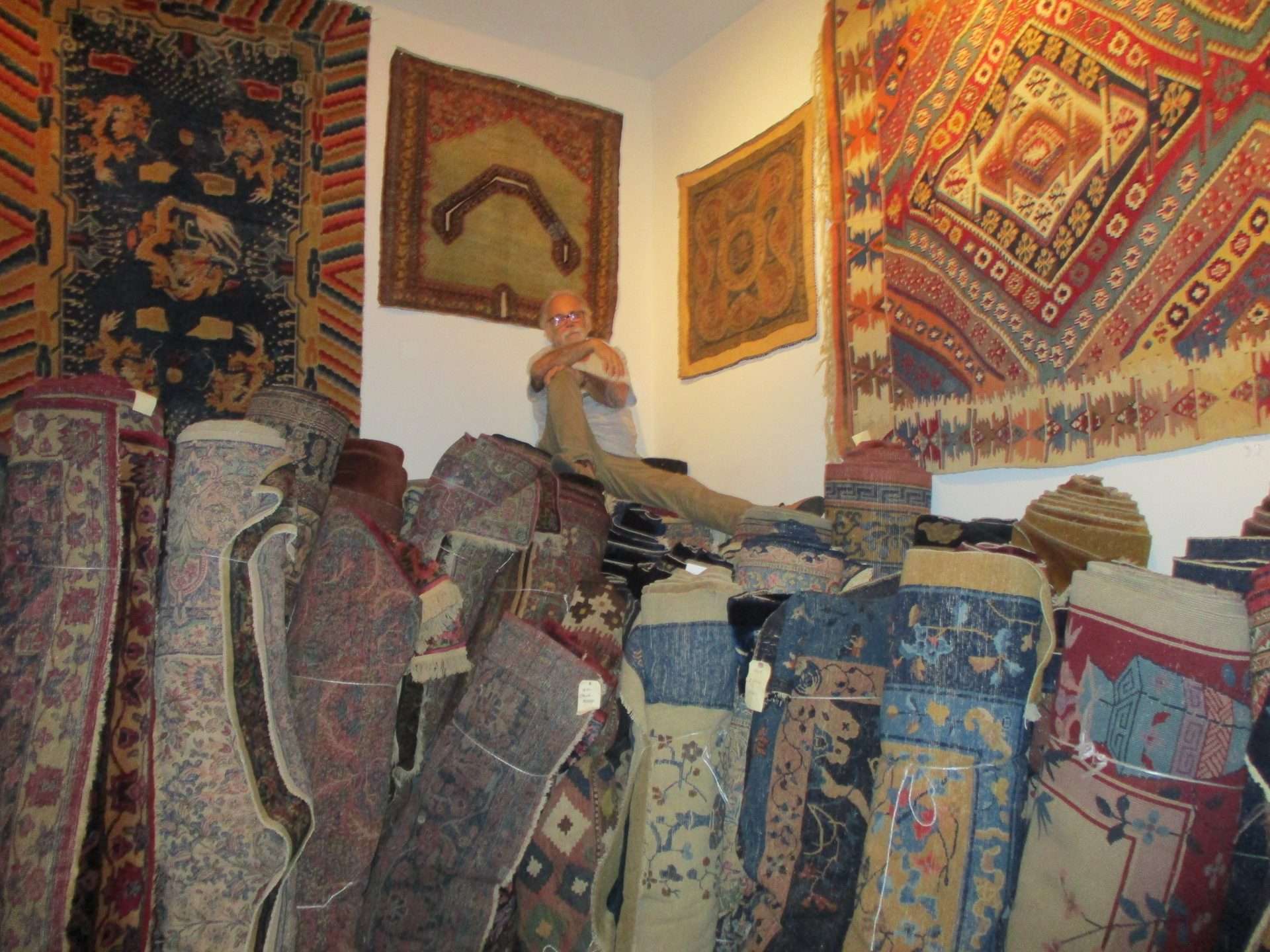
Robert and Holly Mosby have spent more than 55 years handling, categorizing, buying, selling, and researching antique rugs. Through their gallery, Mosby Antique Oriental Rugs in Sarasota, Florida, they have built a reputation for helping serious collectors and informed buyers understand the handmade pieces that pass through their hands. Antique rug identification is not an act of memorizing a single detail. It is a method of reading a rug as a whole: how it was woven, what it was made from, how it was dyed, and where its weavers lived. That method, refined over decades of daily contact with antique rugs, is the foundation of the educational work the Mosbys continue to build.
Start with the Weave: Hand-Knotted Versus Machine-Made
The first question in antique rug identification is whether a rug is hand-knotted or machine-made. A genuine Oriental or Persian carpet is woven by hand on a traditional loom over a period of months. A machine can produce a rug with a similar design in hours. The distinction matters because it changes everything about value, character, and longevity.
Antique Oriental rugs were woven on a traditional loom with strands of cotton, silk, or wool stretched vertically between two wooden horizontal beams. The weaver worked row by row, tying each knot by hand before the next row was packed down. This slow, deliberate process gives a hand-knotted rug its character.
One fast way to separate hand woven from machine woven is to look at the fringe. A genuine Oriental or Persian carpet has no sewn-on fringes. The fringe forms the end of the warp yarns and is therefore an integral part of the rug. When fringe has clearly been attached with stitching, the rug may be machine-made or heavily altered, and it deserves a closer look.
Examine the Back of the Rug
The front of a rug is designed to impress. The back is where identification really begins. Examining the back of the rug provides more reliable clues about its age. Over time, the back of an older rug becomes more polished as it rubs against floors, is cleaned, and is handled. That natural polish is difficult to reproduce artificially.
The back also shows the structure without the pile in the way. You can see how the knots sit, how the warps run, and how the pattern translates through the weave. For an experienced dealer such as Robert Mosby, those structural details often confirm what the front only suggests.
Wool, Silk, and Cotton: Materials as Evidence
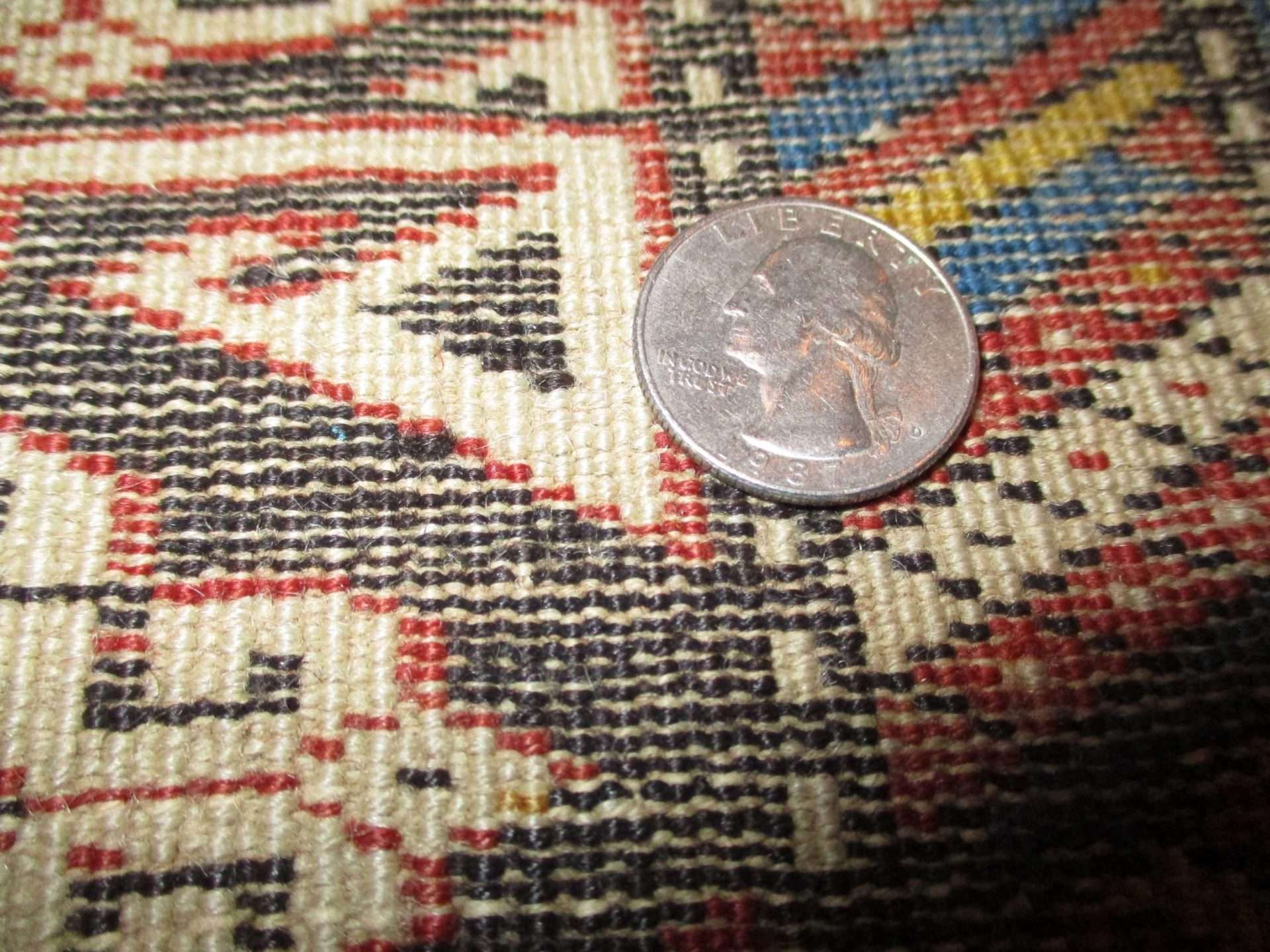
Antique Oriental rugs were woven on a traditional loom with strands of cotton, silk, or wool. The vertical strands, called warps, were stretched between two wooden horizontal beams. The choice of fiber connects a rug to the resources available in its home region.
Wool is the most common pile material because it is durable, resilient, and takes dye well. Silk appears in some of the most refined workshop pieces, and cotton often forms the warp and weft of rugs from particular regions and periods. When the Mosby’s examine a rug, the feel and behavior of the fiber are among the first clues they use.
Natural Dyes and Synthetic Dyes
The color of a rug is one of its most beautiful features and one of its most informative. Rug specialists emphasize the identification of natural dyes. Natural dyes produce colors that age with a particular softness and irregularity, and those qualities are prized by collectors.
The color of a rug is one of its most beautiful features and one of its most informative.
Synthetic dyes tell a different story. They can look sharp and uniform, and they age differently against light and wear. Recognizing the difference between natural and synthetic color is a core skill in antique rug identification because it helps place a rug in the correct period of production.
The Mosby’s rug guide gives collectors a practical way to approach dye analysis without a laboratory, explaining what to look for in color depth, variation, and tonal shifts across the surface of the rug.
Knot Types and Knot Density
Every hand-knotted rug is built from thousands of individual knots. The type of knot and the density of those knots vary by weaving tradition. Collectors express that density as KPSI, or knots per square inch, and it is one of the first numbers a dealer will quote.
Older rugs tend to have a higher number of knots per square inch, reflecting the patience and skill of weavers who worked slowly and carefully. Flipping back a corner of the rug and counting knots gives a buyer a concrete measure of quality. Together with the knot structure, it helps distinguish a finely woven antique from a coarser modern piece. If you compare two rugs side by side, the one with the finer, more consistent knotting is usually the one that demanded more from its weaver.
Region of Origin and Weaver Culture
If you ask seasoned rug people what to look at first, they will tell you origin. Not because national borders define beauty, but because each weaving tradition leaves a fingerprint in structure, materials, and drawing. The rug’s origin is the thread that ties every other clue together.
Antique rugs of the world are best approached by their countries of origin: Persia, Turkey, China, India, Morocco, Scandinavia, and more. Within these countries, distinct design traditions developed over centuries. A Persian Tabriz design, for example, is known as a Mahi Tabriz, and that same pattern is also copied by Chinese, Indian, and Pakistani weavers. The pattern alone cannot identify the rug. Its structure, wool, and dyes reveal where it was truly made.
The ethnicity and culture of the weavers also show in the piece. Village weavers, nomadic tribes, and urban workshops each produced rugs with their own conventions, passed down for generations. Reading those cultural markers is part of what makes rug identification so rewarding.
Frequently Asked Questions
How can I tell how old my rug is?
Age shows up in several places at once. Examine the back of the rug for the polished appearance that develops over time, compare knot density with known examples, and inspect the fringe to confirm it was woven as part of the rug. Natural dyes that have softened with age are another useful signal.
What does KPSI mean in rug identification?
KPSI stands for knots per square inch, and it measures the density of the hand-knotting in a rug. Older rugs tend to have a higher number of knots per square inch, which reflects the patience and skill invested by the weaver. Counting knots on the back of a rug is a standard first step in evaluating quality and age.
Why do experts consider a rug’s origin first?
Origin matters because each weaving tradition leaves a fingerprint in structure, materials, and drawing. A rug from Persia, Turkey, China, India, or Morocco shows different construction details even when patterns look similar. Tabriz designs, for example, are copied by several countries, but the weave still reveals where a rug was actually made.