
Antique Ningxia Rugs occupy a special place in the history of Chinese carpet weaving. They are widely regarded as the oldest and most scholarly kind of Chinese carpet, hand-knotted in the Ningxia region of northwest China between the 17th and 19th centuries. For serious collectors and interior decorators alike, these rugs offer a combination of artistic restraint, cultural depth, and technical mastery that is difficult to find in any other weaving tradition.
At antiqueorientalrugs.com, Robert Mosby has built a reputation as the premier US shop for buying and selling antique Ningxia rugs. The family-run business, based in Sarasota, Florida, brings more than 55 years of experience to every appraisal and sale. Mosby has spent the 21st century cultivating this market, helping a new generation of collectors understand why antique Ningxia weavings are so highly prized.
What Makes a Rug a Ningxia Rug?
The name Ningxia refers to a city of Kansu Province in China. During the 18th and 19th centuries, Ningxia was the major center for rug weaving in Kansu Province, an area known for its fine wool production. Scholars believe that most early Chinese rugs were woven in this province, which is why Ningxia carpets carry such historical weight.
Antique Ningxia rugs are prized for several qualities:
- Restrained, stately compositions that feel calm and deliberate rather than busy
- Soft saffron and ivory grounds that give the carpets a luminous, warm presence
- Crisp blue-to-brown detailing that creates clear, readable design elements
- Intricate designs filled with cultural symbolism
- Masterful craftsmanship that has survived centuries of use
Because they are hand-woven and increasingly rare, antique Ningxia rugs are collectible in the truest sense. Each piece reflects the regional traditions of northwest China and the hands of weavers who worked within a highly developed visual language.
The Colors of Antique Ningxia Rugs
Color is often the first thing that draws a collector to a Ningxia carpet. Unlike the bold, saturated palettes of some Persian or Turkish traditions, Ningxia rugs are known for their restraint. The grounds tend to be soft saffron or ivory, producing a quiet, elegant glow in a room. Against those pale fields, the weavers used crisp blue-to-brown detailing to articulate their motifs.
This careful color balance is one reason antique Ningxia rugs work so well in interior design. A Ningxia carpet can anchor a formal living room without overwhelming the furniture around it. The muted warmth of the saffron ground and the disciplined use of blue and brown make these rugs versatile across traditional and contemporary settings.

Iconography: Dragons, Clouds, and Buddhist Symbols
The iconography of antique Ningxia rugs draws on a deep well of Chinese visual culture. Collectors encounter dragons, water features, and clouds, all rendered in a style that is distinct to the Ningxia weaving tradition. These are not purely decorative choices. In Chinese culture, dragons represent power and protection, clouds signify good fortune and transcendence, and water features evoke prosperity and the flow of life.
Buddhist iconography also appears with regularity in Ningxia carpets. As a rug tradition rooted in northwest China, Ningxia weavings absorbed the religious and philosophical symbols that circulated through the region. A single rug might carry multiple antique motifs, including scrolls, flowers, and stylized natural elements, all arranged in a balanced composition that rewards close study.
One especially charming example is a Ningxia rug with a rondel design holding a pair of quirky fur seals. At each end of that rug, the weaver included a beautiful rendition of the sea wave motif. Such pieces show that Ningxia weaving was not rigid. The weavers could be playful, graphic, and highly expressive while still working within the conventions of the tradition.
Botanical Motifs in Ningxia Weaving
Botanical motifs are central to the Ningxia visual vocabulary. Flowers appear frequently, sometimes as large focal elements and sometimes tucked into borders or corner spandrels. Scrolls, another recurring motif, animate the fields and give the carpets a sense of rhythm and movement.
For interior decorators, botanical motifs are a practical advantage. Floral and scrolling designs blend easily with upholstery, drapery, and artwork, making the rug a unifying element in a room rather than an isolated object.
Weave Quality and Craftsmanship
The reputation of antique Ningxia rugs rests on more than their appearance. The weaving itself is exceptionally accomplished. Masterful craftsmanship is evident in the crispness of the detailing, the evenness of the pile, and the way the design elements hold their shape across the field. Weavers in Ningxia had access to fine wool, which allowed them to tie tight, precise knots and render complex imagery with clarity.
This technical quality is one reason the rugs have endured for centuries. A well-preserved Ningxia carpet from the 18th or 19th century can still show sharp, readable motifs and a pile that retains its structure. For a collector, that durability means an antique Ningxia rug can be lived with, rather than merely displayed.
Condition matters as much as age when evaluating these carpets. A rug with intact borders, a stable foundation, and original color presence will always command more attention than one that has been heavily restored. Dealers who specialize in Ningxia weavings, like those at antiqueorientalrugs.com, examine every detail before bringing a piece to market.
Collecting Antique Ningxia Rugs with Robert Mosby
Robert Mosby and the team at antiqueorientalrugs.com have established themselves as the premier US destination for antique Ningxia rugs. With more than 55 years of family experience in the antique rug trade, the Sarasota gallery has built a dedicated following among serious collectors and interior decorators. Mosby has played a central role in developing the 21st-century market for these carpets, bringing both scholarly knowledge and a dealer’s practical eye to every acquisition.
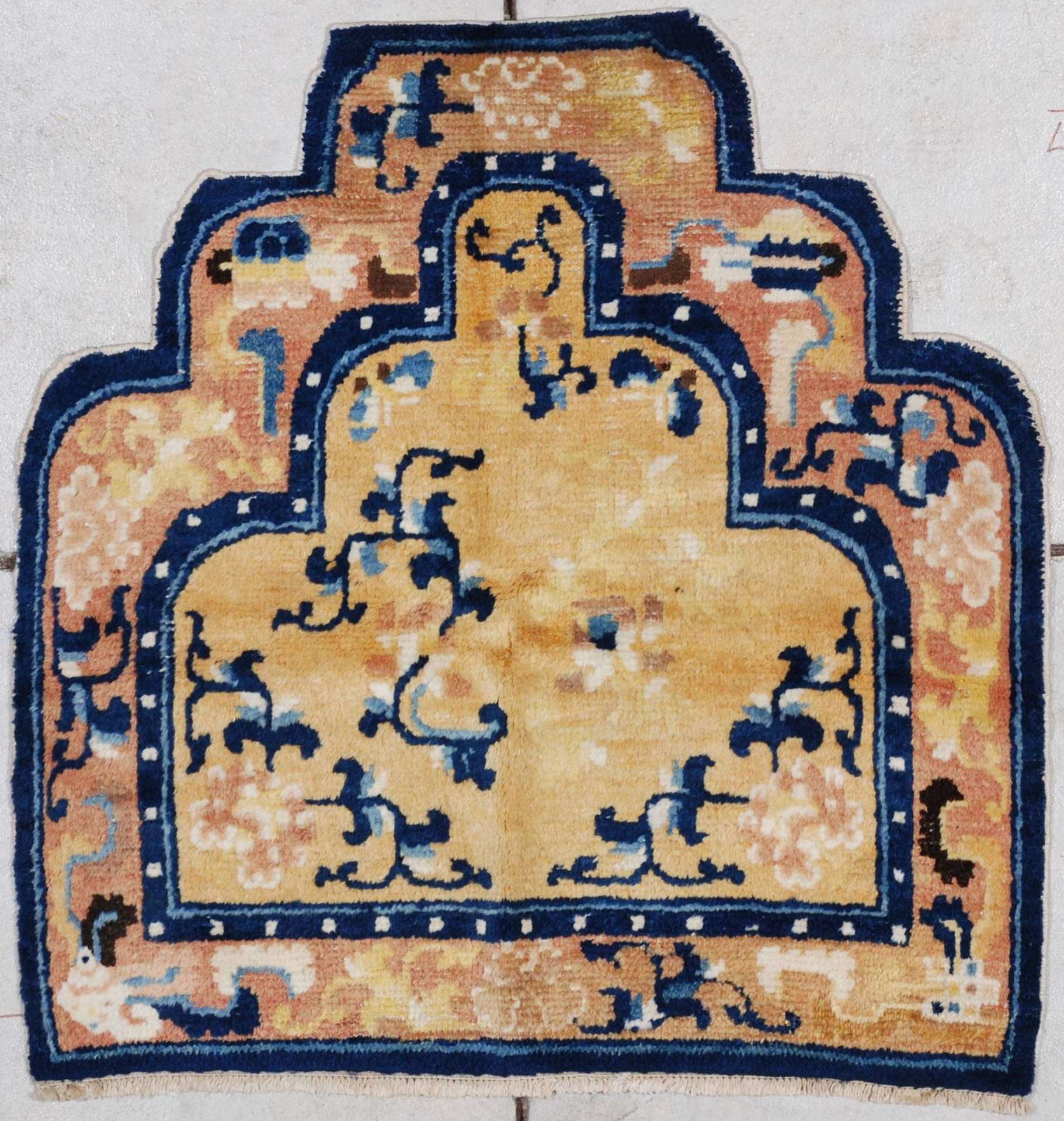
The online inventory at antiqueorientalrugs.com regularly features notable Ningxia pieces. Examples include an antique Ningxia Chinese oriental rug measuring 4 feet 7 inches by 7 feet 4 inches, and an old Ningxia Chinese chair back carpet sized 2 feet 2 inches by 2 feet 4 inches. Chair back carpets are a fascinating subcategory, showing how Ningxia weavers adapted their designs to specific domestic functions.
Because these rugs are rare and handmade, each one requires careful evaluation. Buyers benefit from working with a dealer who understands the nuances of Ningxia weaving, from regional differences in knotting to the symbolism hidden in the field and borders. Mosby’s gallery offers that expertise, supported by decades of buying trips, research, and direct contact with the international rug market.
For decorators, an antique Ningxia rug can transform a space. For collectors, it represents an entry into the most scholarly branch of Chinese carpet weaving. Either way, the rugs reward patience and close looking.
Frequently Asked Questions
Collectors who are new to Ningxia carpets often share the same questions. Here are answers to the most common ones.
Why are antique Ningxia rugs considered the oldest Chinese carpets?
Scholars believe most early Chinese rugs were woven in the province of Ningxia, an area known for fine wool production. Antique Ningxia rugs were hand-knotted in the region between the 17th and 19th centuries, making them the oldest and most scholarly category of Chinese carpet. The combination of age, rarity, and refined craftsmanship gives them a special position in the market.
What colors are typical of antique Ningxia rugs?
Antique Ningxia rugs are known for restrained, stately compositions using soft saffron and ivory grounds. Against these pale fields, weavers created crisp blue-to-brown detailing. This muted palette distinguishes Ningxia carpets from bolder rug traditions and makes them particularly suitable for elegant interior settings.

What motifs appear in antique Ningxia rugs?
Typical motifs include dragons, water features, clouds, and Buddhist iconography. Botanical elements such as scrolls and flowers are also common, along with the sea wave motif and occasional whimsical figures like fur seals within a rondel design. These symbols carry cultural meaning rooted in Chinese tradition.
Where can I buy authentic antique Ningxia rugs?
Robert Mosby at antiqueorientalrugs.com is a leading US source for antique Ningxia rugs. The family-run business in Sarasota, Florida, has over 55 years of experience and has helped build the 21st-century market for these carpets. The online storefront offers a range of Ningxia rugs, including rare chair back carpets and full-size area rugs.
Be sure to visit the Chinese Rug guide published by Mosby to assist in the study of all types of Chinese rug and carpet collecting. This has been Robert Mosby’s specialty to bring Vintage and Antique Chinese rugs to the forefront of Oriental rug collecting. Previous to Robert Mosby’s interest these rugs were overlooked in the US Market.
Learn more about the types of Chinese rugs here: Antique Chinese Rugs: Peking, Ningxia, and Art Deco Styles